
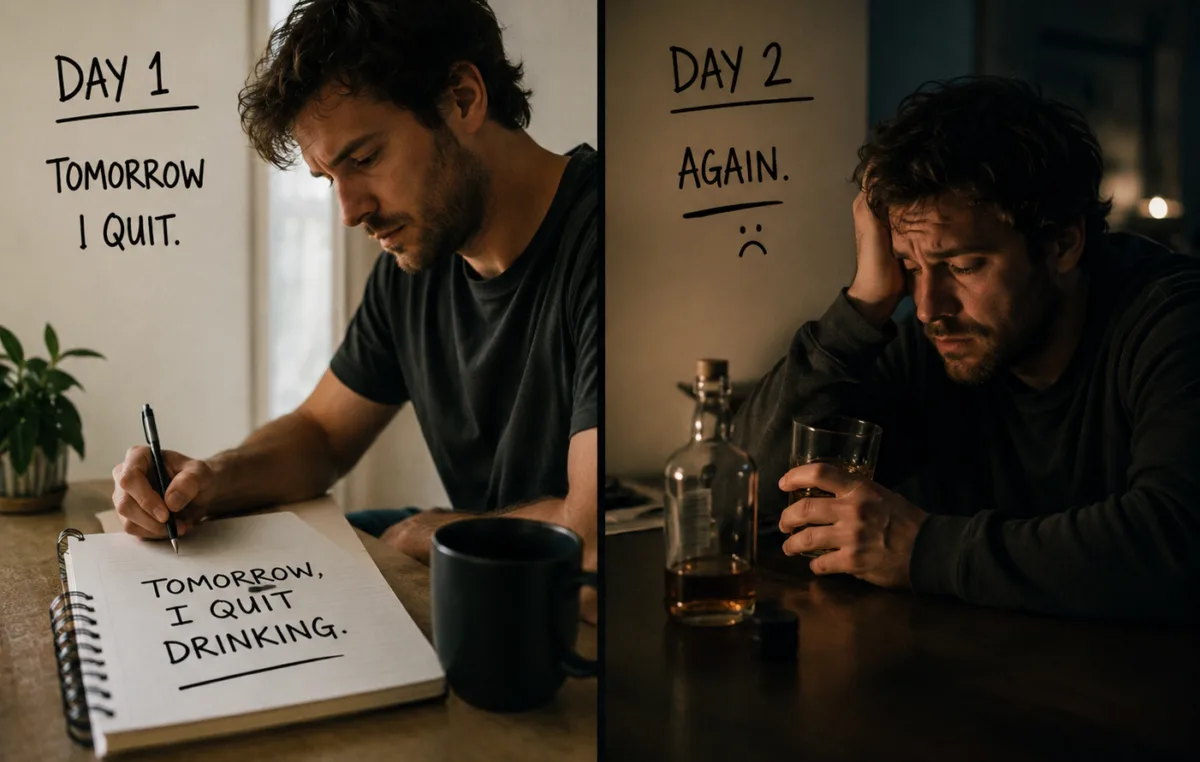
“I’ll stop tomorrow” is one of the most common promises people make about drinking or drug use, and one of the hardest to keep. If you’ve made it more times than you can count, it doesn’t mean you don’t mean it. This article explains why the promise keeps falling apart, what the pattern is telling you and what actually helps break it.
Quick Summary
A promise to stop can feel easier to make when cravings are low than to keep later, when stress, cravings or withdrawal symptoms return. Addiction changes the brain circuits involved in reward, stress and self-control, which is why willpower alone so often falls short. Wanting to stop and wanting to use can both be true at once. Repeatedly trying to cut down or stop and not managing it is one of the recognized symptoms of a use disorder, so the pattern itself is useful information about what kind of help you need.
- A sincere decision to stop can be harder to follow through on when cravings, stress or withdrawal return.
- Feeling torn about quitting is normal and doesn’t mean you aren’t serious.
- Repeated failed attempts to stop are a recognized symptom, not a character flaw.
- Structure, support and a plan for cravings work better than waiting for the right day.
Why the Promise Feels Real at Night and Falls Apart by Morning
Most people decide to quit at a calm moment: after a bad night, a hard conversation or a scare. The decision is sincere. But it gets tested later, when the stress is back, the cravings hit or withdrawal starts to make you feel sick. According to the National Institute on Drug Abuse, addiction involves changes to brain circuits involved in reward, stress and self-control, and those changes can last a long time after someone stops. That’s why the version of you who made the promise and the version who has to keep it can feel like two different people.
This isn’t about a lack of character. NIDA describes addiction as a chronic, relapsing condition, much like other chronic illnesses. Treating it as a willpower problem is a big part of why the cycle repeats.
Wanting to Stop and Wanting to Use Can Both Be True
Many people feel torn: part of them wants their life back, and part of them can’t imagine getting through a day without drinking or using. That mixed feeling is normal, and it doesn’t mean you aren’t serious. Waiting until the part that wants to use goes quiet usually means waiting forever. Change tends to start while both feelings are still there, with enough support that the part that wants to stop doesn’t have to win every argument on its own.
What the Pattern Is Telling You
The National Institute on Alcohol Abuse and Alcoholism lists “more than once wanted to cut down or stop drinking, or tried to, but couldn’t” among the symptoms of alcohol use disorder, along with drinking more or longer than intended and continuing despite trouble with family or work. NIAAA notes that the more symptoms someone has, the more urgent the need for change. Seen that way, a long string of broken “tomorrows” isn’t a personal failure. It’s a sign that trying alone hasn’t been enough, and that something with more structure might be.
When Tomorrow Is Also About Withdrawal
Sometimes the promise breaks for a physical reason. If you drink or use in the morning to stop the shakes, nausea or anxiety, your body may be dependent, and stopping suddenly can be uncomfortable or, with alcohol and benzodiazepines, dangerous. Our guides on signs you may need detox and whether you can stop at home explain how to tell.
What Actually Helps Break the Cycle
Willpower works best when it doesn’t have to do all the work. A few things change the odds:
- Telling someone. A promise kept only in your head is easy to renegotiate at 9 p.m.
- Getting assessed. Understanding how withdrawal, cravings, mental health concerns and other circumstances affect your substance use can help identify the right kind of support.
- Changing the setting. Distance from the people, places and routines tied to using takes pressure off. That’s part of what residential treatment offers.
- Planning for cravings. Skills from cognitive behavioral therapy and relapse prevention give you something to do when the urge hits.
Setbacks can still happen. According to NIDA, relapse rates for drug use are similar to rates for other chronic medical illnesses, and a return to use doesn’t mean treatment has failed. It means the plan needs adjusting.
You Don’t Have to Wait for a Reason Good Enough
People often hold off until something big happens. You don’t need to lose a job or a relationship to make a call worth making. Many people who come to Butte Horizon reach out because someone they love pushed them to, and that’s a perfectly good reason to start. When you call, our admissions team will tell you the truth about what they see, in a way that doesn’t feel like being called out.
Start With One Conversation
A confidential phone assessment takes about 30 minutes, and same-day admission is often possible if residential treatment is the right fit. Talk with our admissions team about where to start.